
 Type 1L concrete, which incorporates portland-limestone cement, has become increasingly popular as contractors and owners look for ways to reduce the environmental impact of concrete construction. While Type 1L mixes can provide excellent performance, they can also present challenges when placement, finishing, curing, or surface preparation are not properly managed.
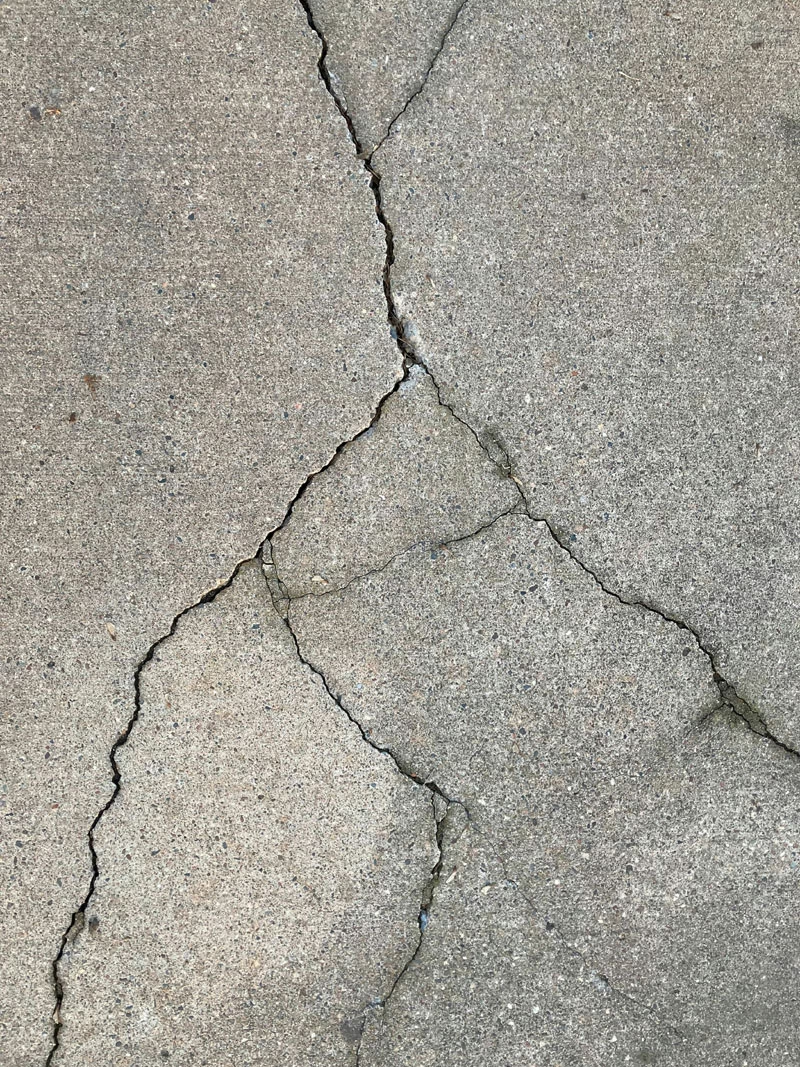
One concern with concrete floors is surface scaling, dusting, or premature surface failure. These problems are not necessarily caused by Type 1L cement itself. They can result from factors such as excess water at the surface, improper finishing, inadequate curing, cold-weather placement, or a weak surface layer.
Proper Practices Make a Difference
Preventing surface problems starts with the concrete mix and continues through every stage of installation. Contractors should avoid adding unnecessary water, allow the concrete to reach the appropriate condition before finishing, and use proper curing procedures. Environmental conditions—including temperature, wind, humidity, and moisture loss—should also be considered.
For industrial and commercial floors, proper surface preparation and finishing are especially important. A durable floor requires a strong, well-consolidated surface capable of withstanding traffic, abrasion, equipment, and other demands.
At The MJA Company, we understand that the long-term performance of a concrete floor depends on more than the concrete mix alone. Through professional concrete surface treatment, repair, polishing, and protective systems, we help improve the durability, appearance, and performance of concrete floors.
Whether the project is large or small, addressing potential surface issues early can help prevent costly repairs and extend the service life of the floor.