Skip to content
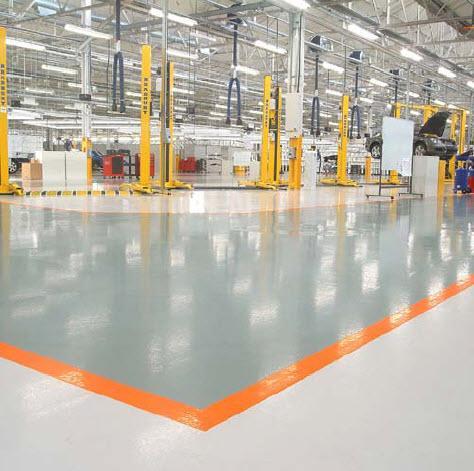
- Epoxy systems create a coating on the concrete surface, the thickness of the coating depends on the type of system used to coat the floor.
- Most epoxy floor coatings are two-part mixes and must be applied quickly after mixing.
- Not recommended for floors that are subject to hydrostatic pressure. Water vapor or moisture may be trapped between the concrete and epoxy coating and may cause blistering and delamination.
- Epoxy sealers must not be applied to previously sealed or painted surfaces unless previous coatings are completely removed.
- Concrete must be free of all contamination to assure proper bond
- Epoxies may be subject to UV discoloration and not generally recommended for areas that receive direct sunlight.
- Epoxy coatings are available in clear or pigmented colors.
- Various colors may be applied to same floor, allowing decorative possibilities such as striping, safety zones, and directional markings.
- Decorative colored chips can be added to enhance decorative look and to camouflage surface dirt.
- Epoxies provide excellent protection against staining, water, and chlorine intrusion.
- No additional polishes or waxes are required to maintain shine.
- Available in solvent-based and water-based formulas.
- Epoxy coatings provide excellent abrasion resistance.
- Curing times for epoxy coatings depend on the type of epoxy used and the ambient temperature during curing process.